
Optimizing Third-Party Healthcare Risk Management Strategies
According to HealthTech Magazine, 55% of healthcare organizations experienced a data breach caused by a third-party vendor in the past year. That’s a staggering reminder of how interconnected and vulnerable healthcare ecosystems have become.
Organizations now rely heavily on third-party vendors for everything from managing patient data to powering clinical systems. While these partnerships drive innovation and efficiency, they also open the door to serious risks. A single vendor vulnerability can expose protected health information (PHI), disrupt operations, or trigger costly compliance violations.
That’s why third-party healthcare vendor risk management has become a strategic priority. It’s no longer just about checking compliance boxes, it’s about protecting patient trust, securing sensitive data, and ensuring uninterrupted care delivery.
Key Takeaways:
Third-party vendor risks can compromise patient safety and data integrity.
Prioritize vendors handling PHI and critical operations using structured frameworks.
Collaboration across departments is key to effective healthcare TPRM.
Continuous monitoring and automation improve visibility and response time.
Auditive’s Trust Center empowers healthcare organizations with real-time vendor insights and proactive risk management.

What Is Healthcare Third-Party Risk Management?
Healthcare Third-Party Risk Management (TPRM) refers to the structured approach of identifying, evaluating, and mitigating the risks that external vendors introduce to healthcare organizations. These vendors can range from EHR and billing system providers to cloud platforms, data processors, and medical device manufacturers, all of whom play a vital role in daily healthcare operations.
In essence, healthcare TPRM ensures your vendors align with your organization’s commitment to patient safety, data protection, and regulatory compliance. It’s not just about contracts or checklists; it’s about building a secure, resilient vendor ecosystem that upholds healthcare integrity.
Here are the core pillars of effective healthcare TPRM:
Data Security: Safeguarding sensitive patient data (PHI) from breaches, leaks, and unauthorized access.
Regulatory Compliance: Verifying vendor adherence to key regulations such as HIPAA, HITECH, and GDPR.
Service Continuity: Ensuring vendors have effective plans to prevent or recover from service disruptions.
Ethical Standards: Confirming that third parties operate responsibly, maintain transparency, and have ethical conduct and patient confidentiality.
With healthcare organizations relying more on digital technologies and third-party integrations than ever before, third-party healthcare vendor risk management has become a cornerstone of cybersecurity, compliance, and patient trust. It’s an ongoing process of vigilance, one that protects not only data but also the credibility and continuity of care.
Why Third-Party Risk Management Is Crucial in Healthcare
Third-party vendors play a vital role in daily operations, from EHR systems and cloud storage to billing and diagnostic tools. But with increased reliance comes increased vulnerability.
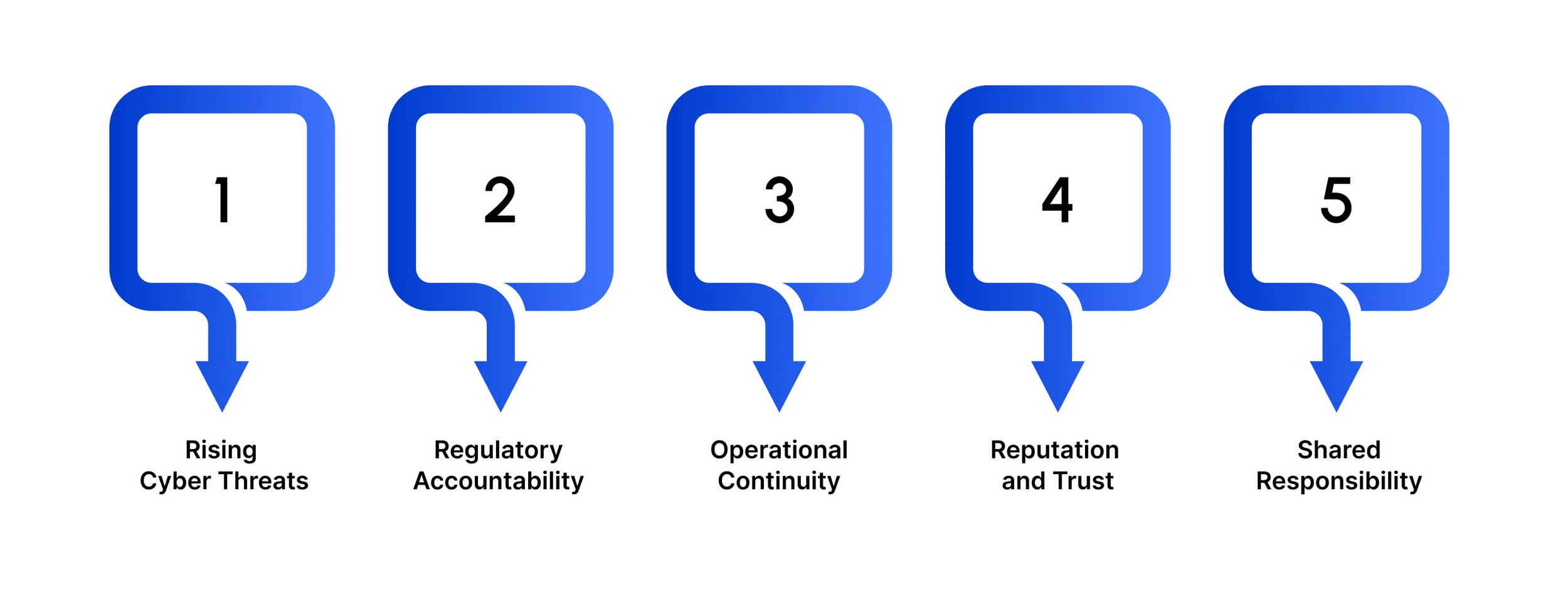
Here’s why managing third-party risks effectively is more important than ever:
Rising Cyber Threats: Healthcare data, especially Protected Health Information (PHI), is among the most targeted by hackers. A breach in a vendor’s system can expose patient records and disrupt operations.
Regulatory Accountability: Laws like HIPAA hold healthcare organizations responsible for their vendors’ actions. Even if the breach happens externally, the provider faces fines, lawsuits, and compliance scrutiny.
Operational Continuity: Vendor failures, technical, financial, or compliance-related, can cause major service interruptions that impact patient care and business stability.
Reputation and Trust: Patients expect their personal data to remain safe regardless of who manages it. A single vendor mistake can damage years of patient trust and institutional credibility.
Shared Responsibility: Each third-party relationship extends the organization’s risk boundary. Healthcare providers must ensure vendors follow the same stringent standards of security, privacy, and ethics.
Strong third-party healthcare vendor risk management not only reduces these risks but also reinforces patient confidence and helps healthcare systems maintain compliance, resilience, and long-term trust.
Also read: Comprehensive Guide to Identifying and Managing Business Risks
Key Components of an Effective Third-Party Healthcare Risk Management Program
Building a effective third-party healthcare vendor risk management program requires more than just conducting background checks. It’s about establishing a structured, ongoing process that manages vendor-related risks throughout every stage of the relationship, from onboarding to contract termination. In healthcare, where sensitive data and patient privacy are at stake, a proactive, lifecycle-driven approach is essential to maintain security, compliance, and trust.
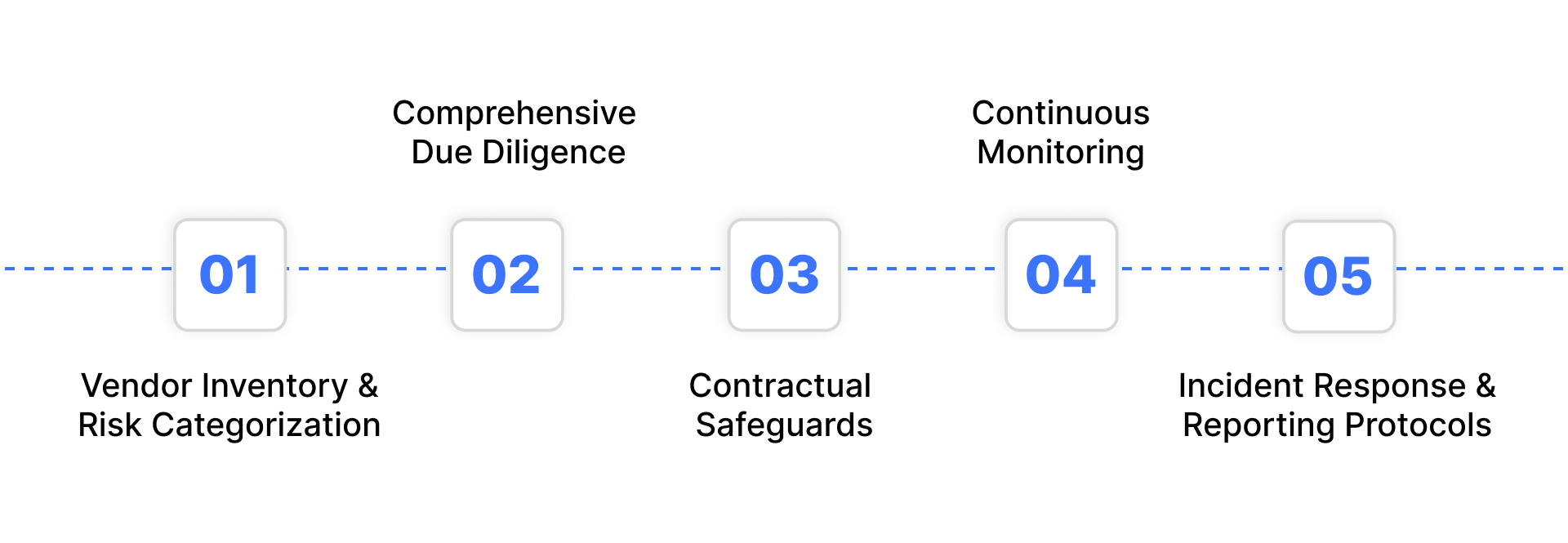
Here are the five foundational pillars that define a strong healthcare TPRM framework:
1. Vendor Inventory and Risk Categorization
Every effective TPRM program begins with visibility. Healthcare organizations need a centralized inventory that lists all third-party vendors, even if they’re electronic health record (EHR) providers, billing partners, or cloud service platforms.
However, the value lies not just in listing names; it’s in classifying each vendor by risk level. For instance:
Vendors handling Protected Health Information (PHI) should be considered high-risk.
Partners offering non-clinical or administrative services may fall under lower-risk categories.
This classification enables healthcare teams to allocate resources wisely, focusing their due diligence and monitoring efforts on vendors that pose the greatest potential impact.
2. Comprehensive Due Diligence and Risk Evaluation
Before any partnership begins, healthcare organizations must conduct thorough due diligence. This process helps uncover a vendor’s security maturity, compliance track record, and reliability.
A complete due diligence review typically includes:
Evaluating security and compliance questionnaires
Verifying industry certifications such as HITRUST or SOC 2
Investigating past data breaches or legal disputes
Assessing financial and operational stability
The objective is simple, to ensure vendors meet your organization’s standards before they gain access to sensitive systems or patient data.
3. Contractual Safeguards and Legal Protection
Strong contracts form the backbone of vendor risk management. For healthcare organizations, that includes ensuring Business Associate Agreements (BAAs) are in place with any vendor handling PHI, a direct requirement under HIPAA.
In addition, contracts should:
Define data handling and breach notification responsibilities
Establish service-level expectations and accountability terms
Include termination clauses for non-compliance or repeated violations
These legal safeguards ensure both parties share mutual understanding and responsibility for maintaining data integrity and compliance.
4. Continuous Monitoring and Periodic Reviews
Vendor risk doesn’t end once the ink dries on the contract. Continuous oversight is vital to ensure vendors maintain compliance and adapt to new threats.
Effective monitoring includes:
Tracking security performance and compliance metrics
Setting up automated alerts for expiring certifications or unusual activities
Conducting annual or event-based reassessments to ensure standards are upheld
By transforming vendor oversight into an ongoing, data-driven process, healthcare organizations can respond swiftly to emerging risks instead of reacting to them after the fact.
5. Incident Response and Reporting Protocols
Even the best-prepared systems can face disruptions. Having a structured incident response plan ensures swift action when a vendor-related issue arises.
This includes:
Defining roles and responsibilities for internal teams and vendors
Establishing clear reporting channels and escalation paths
Conducting post-incident reviews to prevent recurrence
Either it’s a data breach, system outage, or regulatory non-compliance, a coordinated response minimizes operational and reputational damage while keeping the organization aligned with regulatory requirements.
A well-rounded third-party healthcare vendor risk management program isn’t a one-time initiative, it’s a continuous cycle of evaluation, improvement, and accountability. By implementing these key components, healthcare providers can ensure their partnerships strengthen, rather than threaten, the integrity of patient care and organizational security.
Regulatory Frameworks Shaping Healthcare Third-Party Risk Management
In healthcare, managing third-party risk isn’t just about strengthening cybersecurity, it’s also about maintaining compliance within a tightly regulated environment. Every vendor relationship must meet the legal, ethical, and data protection standards that safeguard patient information.
Here’s a breakdown of the key regulatory frameworks influencing third-party healthcare vendor risk management today:
HIPAA & HITECH: These two form the backbone of healthcare compliance in the U.S. Covered entities must ensure that every business associate handling Protected Health Information (PHI) follows strict security protocols. This includes maintaining up-to-date Business Associate Agreements (BAAs) and regularly validating vendor compliance to prevent breaches.
GDPR: Even though it originates in Europe, GDPR affects any healthcare organization that processes data belonging to EU residents. Its core principles, transparency, data minimization, and explicit consent, push vendors to clearly define how personal data is managed, stored, and protected.
State Privacy Laws (CCPA, SHIELD Act, and more): For healthcare providers operating across multiple states, laws like California’s CCPA and New York’s SHIELD Act introduce additional layers of accountability. These laws emphasize timely breach notifications, clear vendor responsibilities, and greater consumer rights over their personal information.
NIST Cybersecurity Framework: Acting as a benchmark for cybersecurity excellence, NIST provides a structured approach for assessing, improving, and communicating an organization’s security posture. It’s particularly valuable for healthcare organizations aiming to build scalable, standards-driven third-party risk programs.
Collectively, these frameworks define not just what compliance looks like, but how healthcare organizations must operate, monitor, and collaborate with vendors to protect sensitive data.
At Auditive, we help healthcare organizations bridge the gap between compliance and operational security. Our solutions align with major frameworks like HIPAA and NIST, ensuring that your vendor ecosystem remains secure, compliant, and resilient in the face of evolving threats.
Learn more: Guide to Effective Reputation Risk Management and Mitigation
Strategies for Effective Third-Party Healthcare Risk Management
Effective third-party healthcare vendor risk management goes beyond ticking compliance boxes; it demands a structured, regionally aware, and proactive approach that strengthens both governance and execution. By aligning organizational culture, technology, and leadership, healthcare institutions can ensure their vendor ecosystem supports security, compliance, and patient trust.
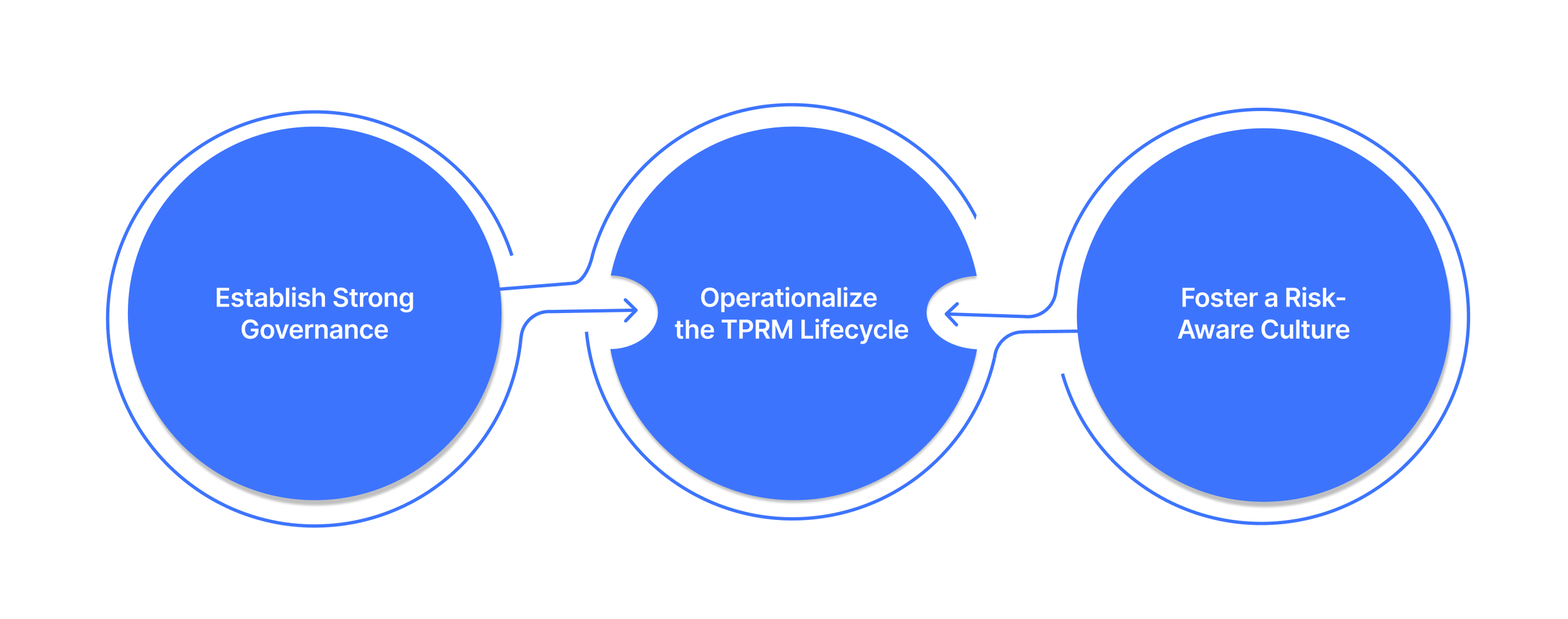
Here’s how to build a strong, sustainable third-party risk management framework:
1. Establish Strong Governance and Regional Alignment
A successful risk management strategy starts with strong governance. Develop a clear third-party risk management (TPRM) framework anchored in international standards like ISO 27001, NIST, or VRMMM. Define your organization’s risk appetite and tolerance, ensuring that all vendor-related decisions remain consistent across departments.
Key actions to consider:
Assign responsibilities across core teams, Risk, IT, Legal, Procurement, and Clinical, for a unified approach.
Secure executive sponsorship to embed risk management into strategic decision-making.
Maintain visibility through board-level reporting for accountability and transparency.
Adapt governance models, centralized or hybrid, to reflect local legal realities. In healthcare, this means complying with regional laws on data localization, patient information privacy, and cross-border data transfers. Embedding local compliance experts ensures your strategy remains resilient amid regional regulatory shifts.
2. Operationalize the TPRM Lifecycle with a Risk-Based Approach
Once the governance foundation is in place, put it into action through risk-based execution. Maintain a centralized vendor inventory and classify vendors based on factors like:
Data sensitivity
Service criticality
Geographical exposure
Conduct risk-tiered due diligence, including documentation reviews, security assessments, and regional intelligence from OSINT or HUMINT sources.
Before onboarding, evaluate vendors for:
Sanctions and political connections
Financial health and stability
Reputational and compliance risks
When drafting contracts, ensure clauses align with regional healthcare and data protection laws, covering aspects such as:
Service-level agreements (SLAs)
Breach notification protocols
Audit rights
Business continuity terms
Incorporate anti-bribery, ESG, and healthcare-specific regulatory clauses to safeguard compliance. Implement continuous monitoring using automated tools that track KPIs, trigger reassessments, and flag anomalies. Integrating your TPRM system with IT service management and procurement platforms helps maintain consistency and efficiency.
3. Foster a Risk-Aware Culture and Build Resilience
Technology and policies mean little without a strong risk-aware culture. Conduct regular training sessions in local languages to make cyber and compliance topics accessible to diverse teams. Emphasize shared responsibility, every department, from clinical to procurement, plays a role in mitigating vendor risks.
Empower leadership with real-time dashboards and automated reporting tools that translate complex data into actionable insights.
To enhance resilience:
Diversify your vendor portfolio to avoid overdependence on high-risk suppliers or regions.
Align vendor continuity plans with organizational recovery objectives (RTOs).
Continuously evolve your TPRM program based on insights from audits, reassessments, and changing regulations.
At Auditive, we understand that healthcare risk management isn’t just about compliance, it’s about protecting patient trust and operational integrity. Our integrated TPRM solutions help organizations automate due diligence, enhance vendor visibility, and maintain regulatory alignment effortlessly. By bridging governance with real-time intelligence, Auditive empowers you to make faster, smarter, and safer vendor decisions.
Best Practices for Strong Third-Party Healthcare Vendor Risk Management
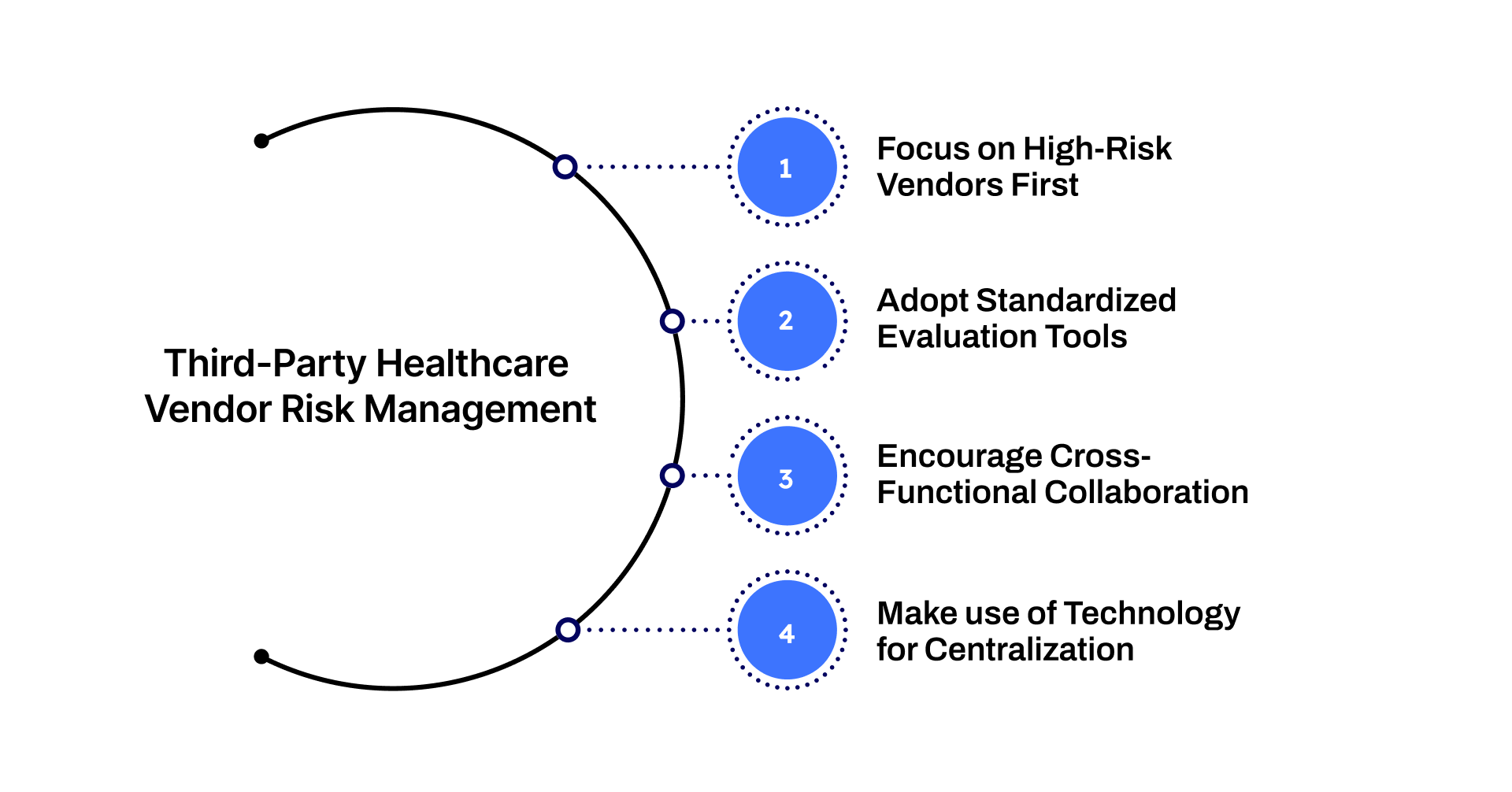
Creating a resilient third-party healthcare vendor risk management (TPRM) program requires more than compliance, it demands a well-balanced strategy that merges efficiency, collaboration, and proactive oversight. To achieve this, healthcare organizations must focus on practical best practices that enhance visibility, minimize risks, and strengthen operational trust.
Here’s how you can elevate your healthcare TPRM framework:
Focus on high-risk vendors first: Not every vendor carries the same level of exposure. Prioritize those who handle Protected Health Information (PHI) or support critical clinical systems. A risk-based tiering system helps allocate time and resources efficiently.
Adopt standardized evaluation tools: Use consistent and proven frameworks such as NIST or HITRUST, alongside structured security questionnaires and risk scoring models. This ensures a fair, transparent, and data-driven vendor assessment process.
Encourage cross-functional collaboration: Vendor risk management shouldn’t be limited to IT. Engage compliance, legal, procurement, and clinical teams for a 360-degree view of vendor performance and vulnerabilities.
Make use of technology for centralization: Implement a unified platform to manage vendor data, documentation, and audits. Centralized tracking enhances visibility, reduces manual errors, and keeps risk monitoring efficient and transparent.
By aligning processes, technology, and teamwork, healthcare organizations can proactively address risks and create a safer, more compliant vendor ecosystem.
At Auditive, we help healthcare providers turn complex vendor ecosystems into secure, well-governed networks. With intelligent automation and real-time risk monitoring, we empower your organization to focus on care delivery while maintaining compliance confidence.
Read more: Third-Party Contract Management: Steps and Best Practices

How Auditive Strengthens Healthcare Vendor Risk Management
Managing third-party healthcare vendor risk can be overwhelming, especially when you’re balancing patient safety, compliance requirements, and operational efficiency. That’s where Auditive steps in.
Auditive simplifies complex vendor ecosystems with a platform designed to help healthcare organizations gain full visibility, automate workflows, and stay audit-ready at all times. By integrating advanced analytics and continuous monitoring, we help you identify, assess, and mitigate risks before they disrupt your operations.
Here’s what makes Auditive stand out:
Smart Vendor Risk Scoring: Automatically evaluate and categorize vendors based on sensitivity, compliance posture, and criticality to your healthcare operations.
Real-Time Monitoring: Get instant alerts on vendor performance issues, data breaches, or non-compliance events to take immediate action.
Compliance Confidence: Align effortlessly with major frameworks like HIPAA, HITRUST, and NIST while keeping documentation organized for audits.
Collaborative Risk Management: Connect compliance, IT, procurement, and legal teams on a unified dashboard for seamless decision-making.
With Auditive, you’re not just managing vendors, you’re building a secure, compliant, and resilient healthcare ecosystem that safeguards both your data and your reputation.
Final Thoughts
Effective third-party healthcare vendor risk management is no longer just about compliance; it’s about building trust, ensuring patient data protection, and maintaining operational continuity. By adopting a proactive, data-driven approach supported by strong frameworks and reliable partners, healthcare organizations can mitigate vulnerabilities before they escalate into major disruptions.
This is where Auditive makes a difference. Our intelligent Trust Center offers real-time insights into your vendor ecosystem, empowering you to monitor risks, streamline compliance, and maintain transparency with every third-party interaction. With automated assessments, continuous monitoring, and centralized reporting, Auditive helps your organization stay compliant, confident, and resilient.
Partner with Auditive today and take control of your third-party ecosystem with smarter visibility and built-in compliance confidence.
FAQs
1. What is third-party healthcare vendor risk management?
It’s the process of identifying, assessing, and mitigating risks associated with external vendors that handle healthcare data, services, or infrastructure, especially those interacting with sensitive patient information.
2. Why is vendor risk management critical for healthcare organizations?
Because vendors often have access to confidential data and systems. Without proper oversight, they can become a gateway for data breaches, compliance violations, or operational failures.
3. How can healthcare providers assess vendor risks effectively?
Using standardized risk scoring models, security questionnaires, and frameworks such as HIPAA, HITRUST, or NIST helps objectively evaluate vendor security posture and compliance readiness.
4. What role does continuous monitoring play in healthcare TPRM?
Continuous monitoring ensures you’re alerted to any changes in a vendor’s security, compliance, or performance status, allowing proactive action before issues impact operations.
5. How does Auditive support vendor risk management in healthcare?
Auditive centralizes risk visibility, automates compliance tracking, and offers a dedicated Trust Center that empowers organizations to maintain transparency, strengthen vendor relationships, and uphold healthcare data integrity.
