
Understanding SOC Reports: A Comprehensive Guide

Organizations depend on third-party service providers for critical functions such as cloud hosting, payroll, and data management. While outsourcing enhances scalability and efficiency, it also brings significant risks tied to security, privacy, and compliance. Protecting sensitive information and maintaining stakeholder trust requires assurance that vendors operate with strong, reliable controls.
That’s where SOC reports come in. These independent, third-party assessments provide visibility into a service provider’s internal controls and data protection measures, helping businesses verify compliance, manage vendor risk, and demonstrate accountability.
This guide breaks down the essentials of SOC reports, their types, components, and trust criteria, and outlines how they strengthen your organization’s overall risk management and compliance posture.
Key takeaways:
SOC reports provide independent validation of an organization’s controls.
SOC 1, 2, and 3 serve different purposes, financial reporting, security/compliance, and general assurance.
Key components include system description, management’s assertion, auditor’s opinion, and test results.
Trust Service Criteria focus on security, availability, processing integrity, confidentiality, and privacy.
Best practices involve continuous monitoring, employee training, strong controls, and using technology.
Auditive and Trust Center enhance vendor oversight, automate monitoring, and convert SOC reports into actionable insights.
Implement SOC reporting, integrate vendor risk management, and use Auditive for transparency, compliance, and stronger decision-making.
Understanding SOC Reports
A SOC report, short for System and Organization Controls report, is an independent evaluation of a service organization’s internal controls, focusing on areas such as financial reporting, security, privacy, and operational effectiveness. These reports are issued by certified public accountants (CPAs) and provide assurance to stakeholders that the organization is managing risk effectively.
SOC reports are designed to give organizations, clients, and regulators insight into how a service provider manages critical risks. They help verify that the organization has appropriate controls in place to safeguard data, maintain operational integrity, and meet compliance obligations. In essence, a SOC report serves as a trusted document that confirms accountability and reliability.
SOC reports play a pivotal role in modern business environments:
Risk Management: They allow businesses to evaluate the reliability and security of third-party vendors.
Regulatory Compliance: Many industries require documented evidence of controls for audits and regulatory purposes.
Client Confidence: Sharing SOC reports with clients demonstrates transparency and strengthens trust in service relationships.
Operational Insight: Internally, SOC reports help organizations identify gaps in controls and improve processes.
SOC reports are categorized based on the type of assurance and focus area:
SOC 1: Focuses on controls relevant to financial reporting.
SOC 2: Evaluates controls related to security, availability, processing integrity, confidentiality, and privacy.
SOC 3: Provides a summarized version of a SOC 2 report for general public use, without sensitive details.
By understanding the purpose and importance of SOC reports, organizations can better use these assessments to manage risk, ensure compliance, and build confidence among stakeholders.

Types of SOC Reports
Service Organization Control (SOC) reports are essential tools for evaluating and communicating the effectiveness of a service organization’s internal controls. They provide transparency, build trust, and help clients, partners, and regulators assess the risk associated with outsourcing services.
Each SOC report type is tailored to address specific areas of concern and target audiences, making it crucial to understand their unique purposes and applications.
1. SOC 1 Report: Financial Reporting Assurance
SOC 1 reports focus on internal controls over financial reporting (ICFR). They are particularly relevant for organizations whose services impact clients’ financial statements, such as payroll providers, financial transaction processors, and accounting software companies.
Key Points:
Purpose: Provides assurance that controls are designed and operating effectively to support accurate financial reporting.
Audience: Primarily used by external auditors, finance teams, and clients who need to rely on the service organization’s processes for financial accuracy.
Types:
Type I: Assesses the design of controls at a specific point in time. It answers the question: “Are the controls suitably designed to achieve the intended control objectives?”
Type II: Evaluates both the design and operational effectiveness of controls over a defined period (typically 6–12 months). It answers: “Do these controls operate effectively over time?”
SOC 1 reports are critical for ensuring compliance with regulations such as Sarbanes-Oxley (SOX) and for providing auditors with the documentation needed to evaluate financial risk.
2. SOC 2 Report: Security, Privacy, and Compliance Assurance
SOC 2 reports extend beyond financial reporting to focus on operational and IT controls related to the Trust Service Criteria: Security, Availability, Processing Integrity, Confidentiality, and Privacy. These reports are particularly valuable in today’s environment, where data security and privacy are top concerns for businesses and customers.
Key Points:
Purpose: Validates that a service organization has effective controls to protect sensitive data and maintain operational integrity.
Audience: Clients, regulators, business partners, and internal management seeking assurance about information security practices.
Types:
Type I: Provides a snapshot of the design and implementation of controls at a specific date.
Type II: Assesses both the design and operating effectiveness of controls over a defined period, giving stakeholders confidence that security practices are consistently followed.
SOC 2 reports are widely requested by organizations in cloud computing, SaaS, healthcare, and fintech, where data protection and privacy compliance are critical.
3. SOC 3 Report: High-Level Assurance for Public Use
SOC 3 reports provide a summary of SOC 2 findings and are intended for general distribution. Unlike SOC 2, they do not include detailed descriptions of controls or test results, making them suitable for marketing materials or public disclosure to demonstrate trustworthiness.
Key Points:
Purpose: Offers a public-facing certification that the service organization meets the SOC 2 Trust Service Criteria.
Audience: General public, clients evaluating service providers, and prospective customers.
Details: Provides assurance without revealing sensitive internal processes, helping organizations showcase compliance while maintaining security.
Comparing SOC 1, SOC 2, and SOC 3
| Feature | SOC 1 | SOC 2 | SOC 3 |
|---|---|---|---|
| Primary Focus | Financial reporting controls | Security, availability, processing, confidentiality, privacy | High-level summary of SOC 2 compliance |
| Intended Audience | Auditors, clients | Clients, regulators, partners | General public |
| Level of Detail | Detailed control testing | Detailed control testing | High-level summary |
| Type I vs. Type II | Both available | Both available | Not applicable |
| Public Distribution | Restricted | Restricted | Yes |
| Use Case Examples | Payroll processing, financial statement support | Cloud services, SaaS platforms, IT vendors | Marketing, stakeholder assurance, public trust |
When to Use Which SOC Report
SOC 1: Use when your services affect client financial statements and auditors require assurance over financial controls.
SOC 2: Choose when clients or regulators need evidence of strong security, privacy, and operational controls.
SOC 3: Share publicly to demonstrate compliance and reliability without exposing sensitive control information.
Understanding the differences between SOC 1, SOC 2, and SOC 3 reports is critical for organizations seeking to manage risk, meet compliance requirements, and build trust with stakeholders. Selecting the appropriate report ensures the right level of assurance is provided to the intended audience while supporting effective vendor management, operational oversight, and regulatory alignment.
Also read: Risk Management: Critical Business Success
Components of a SOC Report

A SOC report is designed to provide transparency into a service organization’s controls and assurance processes. Understanding its components is crucial for interpreting the report and assessing the organization’s risk posture.
1. Service Organization’s Description of the System
This section outlines the services provided, the systems used to deliver them, and the internal processes in place. It offers context for the controls being evaluated, including infrastructure, software, people, procedures, and data flow.
2. Management’s Assertion
Management formally asserts that the controls described are implemented effectively and meet the relevant criteria. This declaration serves as the foundation of the auditor’s assessment and provides accountability for the organization.
3. The Auditor’s Opinion
The auditor evaluates management’s assertions and issues an independent opinion on the effectiveness of the controls. This opinion indicates whether the organization meets the specified SOC criteria and identifies any significant deficiencies.
4. Information on Tests of Controls and Results
Details of the audit procedures performed
Evidence gathered and tested
Results of control effectiveness testing
This section helps stakeholders understand how rigorously controls were examined and highlights any areas requiring attention.
5. Additional Information Provided by the Service Organization
Some SOC reports may include:
Complementary user entity controls that clients must implement
Observations on operational improvements
Notes on exceptions or limitations encountered during the audit.
This supplementary information provides further clarity and actionable insights for users of the report.
At Auditive, we recognize that interpreting these components effectively is critical for proactive vendor risk management. By combining transparent SOC reporting with continuous monitoring, organizations can turn audit findings into actionable insights that strengthen trust and operational resilience.
SOC 2 Trust Service Criteria
SOC 2 reports assess a service organization’s internal controls based on five Trust Service Criteria (TSC). These criteria are essential for ensuring that systems are secure, reliable, and protect sensitive data, giving stakeholders confidence in the organization’s operations and vendor relationships.
1. Security: Protecting Information and Systems
The security criterion ensures that systems are safeguarded against unauthorized access, both physical and logical. It is the foundation of trust in any service organization.
Key Controls and Practices:
Access Management: Role-based access controls, strong authentication, and regular access reviews.
Network and System Protection: Firewalls, intrusion detection systems, and antivirus solutions.
Employee Training: Regular security awareness programs to reduce human error risks.
Incident Response: Documented procedures for detecting, reporting, and mitigating security incidents.
Objective: To prevent data breaches, cyberattacks, and operational disruptions, ensuring business continuity and protecting sensitive information.
Learn more about: How to Prevent Data Breaches in Healthcare
2. Availability: Ensuring System Accessibility
Availability assesses whether systems are operational and accessible as agreed with customers and stakeholders.
Key Controls and Practices:
Redundancy and Failover: Backup servers, data replication, and network redundancy.
Disaster Recovery and Business Continuity Plans: Procedures to maintain operations during disruptions.
Monitoring and Alerts: Continuous system monitoring to detect and respond to downtime quickly.
Objective: Guarantee reliable access to critical services, applications, and data, minimizing downtime and operational impact.
3. Processing Integrity: Accuracy, Completeness, and Timeliness
Processing integrity ensures that systems process data accurately, completely, and in a timely manner.
Key Controls and Practices:
Input Validation: Verification checks for data accuracy and completeness.
Error Handling: Procedures to detect and correct processing errors.
Audit Trails: Logs and tracking mechanisms for transactions and system operations.
Objective: Ensure that business processes, transactions, and system outputs are correct, complete, and authorized, supporting operational reliability.
4. Confidentiality: Protecting Sensitive Information
Confidentiality focuses on safeguarding sensitive organizational or client information from unauthorized disclosure.
Key Controls and Practices:
Encryption: Data encryption at rest and in transit.
Access Controls: Limiting data access based on roles and responsibilities.
Secure Transmission: Using secure channels for sharing confidential information.
Objective: Protect proprietary data, trade secrets, and sensitive business information, maintaining trust with clients and stakeholders.
5. Privacy: Safeguarding Personal Information
The privacy criterion ensures that personal information is collected, used, retained, and disclosed according to the organization’s privacy policies and regulatory obligations.
Key Controls and Practices:
Consent Management: Obtaining and recording consent for data collection and processing.
Data Minimization: Collecting only the personal data necessary for business purposes.
Secure Storage and Retention: Implementing secure storage and controlled retention policies.
Regulatory Compliance: Adhering to GDPR, CCPA, and other applicable privacy regulations.
Objective: Protect customer and employee personal information, ensure regulatory compliance, and maintain stakeholder trust.
These SOC 2 trust criteria serve as the foundation for Auditive's vendor and service provider evaluation process. By adhering to these standards, organizations can demonstrate compliance, enhance transparency, and establish good operational controls, ultimately building trust with clients and reinforcing the integrity of their systems.
The Role of Auditors in SOC Reporting
Auditors are the cornerstone of SOC reporting, providing independent validation that a service organization’s controls are appropriately designed, implemented, and operating effectively. Their evaluation ensures that stakeholders, including clients, regulators, and business partners, can trust the integrity, security, and compliance of the organization’s systems.
Qualifications and Expertise of SOC Auditors

Professional Credentials: Most SOC auditors are Certified Public Accountants (CPAs) with extensive experience in auditing standards, risk management, and compliance frameworks.
Specialized Knowledge: Effective SOC auditors understand IT systems, cybersecurity protocols, data privacy regulations, and industry-specific controls. This expertise allows them to accurately assess both technical and operational aspects of a service organization.
Continuous Learning: Auditors regularly update their skills to stay current with evolving frameworks, regulatory requirements, and emerging risks.
The SOC Audit Process
SOC reporting follows a structured, multi-step audit process to ensure consistency and reliability:
Planning and Scoping
Define the scope of the audit, identifying critical systems, controls, and risk areas to evaluate.
Collaborate with management to understand organizational processes and key objectives.
Control Testing
Evaluate the design and operational effectiveness of internal controls.
Conduct both manual and automated testing to validate adherence to SOC criteria.
Evidence Collection and Documentation
Gather logs, policy documents, procedural records, and system configurations.
Ensure sufficient evidence exists to support the auditor’s findings and opinions.
Evaluation and Reporting
Analyze results, identify exceptions or weaknesses, and assess overall control effectiveness.
Issue the SOC report, including management’s assertions and the auditor’s opinion, which may be unmodified (clean), qualified, or adverse, reflecting varying levels of assurance.
Interpreting Auditor Opinions
Unmodified (Clean) Opinion: Indicates that controls are effectively designed and operating as intended.
Qualified Opinion: Highlights specific areas where controls may not meet criteria, but overall systems remain largely compliant.
Adverse Opinion: Signals significant deficiencies in controls, requiring immediate attention.
Best Practices for Organizations
Engage auditors early to clarify objectives and scope for smoother audits.
Maintain organized, detailed documentation of all processes and controls.
Review and act on audit findings promptly to strengthen internal controls and mitigate risks.
Foster ongoing collaboration with auditors to continuously improve control environments.
By understanding the critical role of auditors and actively engaging with their insights, organizations can turn SOC reports into powerful tools for risk management, trust-building, and strategic decision-making.
Implementing and Utilizing SOC Reports
Effectively implementing and using SOC reports ensures organizations don’t just receive audit results, they use them to enhance risk management, strengthen controls, and maintain regulatory compliance. Proper utilization turns insights into measurable improvements across internal processes and vendor relationships.
Know more about: Create a Vendor Management Policy
Preparing for a SOC Audit
Before a SOC audit, preparation is crucial to ensure a smooth assessment and maximize the report’s value.
Internal Readiness: Review existing policies, procedures, and controls. Ensure all employees understand their roles and responsibilities related to the systems being audited.
Gap Analysis: Conduct a detailed evaluation to identify weaknesses or areas where processes may not fully align with SOC requirements. Addressing these gaps proactively reduces audit findings and strengthens the control environment.
Collaboration: Engage IT, finance, compliance, and operations teams early to align processes, document evidence, and confirm that all systems and workflows meet expected standards.
Proper preparation not only increases the likelihood of a successful audit but also provides a clearer understanding of current control effectiveness, laying the foundation for continuous improvement.
Using SOC Reports for Vendor Management
SOC reports are a critical tool for evaluating and managing third-party vendors. They provide transparency into the control environment and highlight potential risks.
Evaluating Vendors: Use SOC findings to determine whether vendors meet your organization’s security, privacy, and operational standards.
Ongoing Monitoring: Schedule regular reviews of SOC reports to maintain continuous oversight of key suppliers and service providers.
Risk Mitigation: Identify potential control weaknesses and collaborate with vendors to implement corrective measures, reducing operational and compliance risks.
By utilizing SOC reports effectively, organizations can maintain a stronger vendor oversight program, minimize exposure to third-party risks, and ensure consistent performance and compliance across their ecosystem.
Using SOC Reports to Comply with Regulations
SOC reports also serve as vital documentation for regulatory adherence, helping organizations meet internal and external compliance requirements.
Evidence for Audits: Provide verifiable documentation to satisfy internal auditors and regulatory bodies.
Alignment with Standards: SOC reports often map to frameworks such as ISO 27001, HIPAA, or GDPR, streamlining compliance reporting.
Support for Reporting: Communicate control effectiveness and risk management outcomes clearly to stakeholders, enhancing transparency and trust.
Utilizing SOC reports for compliance not only reduces regulatory risk but also demonstrates proactive governance, helping organizations maintain credibility with stakeholders and regulators alike.
Communicating SOC Report Findings to Stakeholders
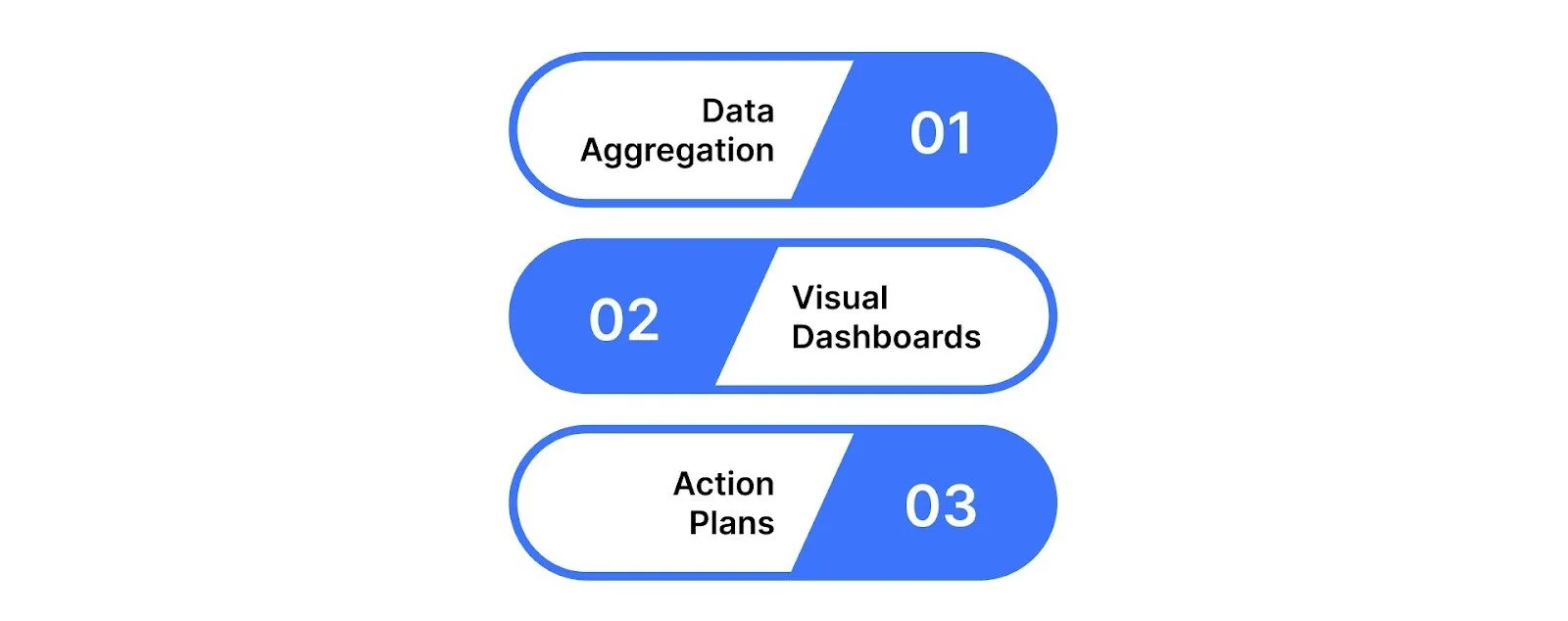
Effective communication ensures SOC report insights translate into informed decisions and actionable strategies.
Executive Summaries: Highlight control strengths, audit observations, and remediation recommendations in concise reports for leadership.
Visual Dashboards: Use charts, graphs, or tables to convey audit outcomes, trends, and risk levels at a glance.
Action Plans: Outline specific steps and timelines for remediation, ensuring accountability and continuous improvement.
Clear, structured communication ensures that SOC report findings are actionable, helping organizations implement necessary changes and reinforce a culture of transparency and accountability.
Transforming SOC report insights into workable strategies is what we at Auditive do for organizations.
Businesses can go beyond merely comprehending risk to actively reducing it by incorporating audit findings into vendor management, compliance initiatives, and internal decision-making. This will increase enterprise-wide operational confidence, resilience, and trust.
Challenges and Best Practices
SOC reporting is a critical component of organizational compliance and risk management, but implementing and maintaining it effectively comes with its own set of challenges. Understanding these hurdles and adopting best practices allows organizations to derive real value from SOC reports while maintaining regulatory compliance.
Here are some of the challenges faced:
Managing Complex Control Requirements
One of the primary challenges in SOC reporting is meeting the rigorous control requirements set by the different SOC frameworks. Whether preparing for a SOC 1, SOC 2, or SOC 3 report, organizations must establish detailed documentation, implement well-defined processes, and maintain consistent internal controls. Failure to align processes with SOC criteria can lead to audit delays, non-compliance findings, or inaccurate reporting.
Keeping Up with an Evolving Regulatory Landscape
Compliance requirements are continuously evolving across industries. Organizations must stay informed about changes in regulations and industry standards to ensure their SOC reports remain relevant and credible. This requires a proactive approach, monitoring regulatory updates, and integrating changes into internal control practices without disruption to daily operations.
Addressing Resource Constraints
Smaller teams or organizations with limited resources often face challenges in dedicating sufficient time, personnel, and technology to maintain strong controls. Without proper allocation, organizations risk gaps in documentation, testing, or ongoing monitoring, which can compromise the reliability of SOC reports.
Managing Third-Party Dependencies
Many businesses rely on vendors or third-party service providers, which introduces additional layers of risk. SOC reporting requires that organizations continuously assess and monitor these dependencies to ensure that vendors adhere to required controls. This adds complexity to the audit process and necessitates strong vendor management practices.
These are some of the best practices:
Establish a Strong Control Environment
A solid control environment forms the foundation for successful SOC reporting. Organizations should clearly define policies, procedures, and responsibilities across all departments. Conducting regular internal reviews ensures that processes consistently meet SOC criteria and identify areas for improvement before an audit.
Implement Continuous Monitoring and Improvement
SOC compliance is not a one-time effort; it requires ongoing vigilance. Organizations should adopt automated tools and dashboards to track control effectiveness in real time. Regular updates to processes help address emerging risks and any gaps identified during internal or external audits.
Promote Communication and Training
Employee awareness is crucial for maintaining compliance. Regular training programs help staff understand SOC requirements and the importance of adhering to controls. Transparent communication with stakeholders regarding findings and corrective actions fosters confidence and strengthens organizational accountability.
Making Use of Automation and Technology
Integrating technology into SOC processes can significantly improve efficiency and accuracy. Automated solutions streamline documentation, control testing, and reporting, while integrating compliance monitoring with vendor management systems enhances oversight and ensures that third-party risks are continuously assessed.
By understanding these challenges and applying best practices, organizations can transform SOC reporting from a compliance requirement into a strategic tool. Properly implemented, SOC reports enhance operational transparency, strengthen risk management, and build trust with stakeholders.
Transforming Vendor Risk Management
In the current dynamic business climate, traditional vendor risk management frequently fails. Auditive addresses this gap with a continuous, AI-powered Trust Exchange that promotes transparency and proactive oversight.
Key Benefits:
Continuous Monitoring: 365-day real-time insights keep vendor risk profiles up to date.
Automated Workflows: Streamlines onboarding and automates up to 80% of risk review tasks.
AI-Driven Trust Profiles: Offers a comprehensive view of vendor security, compliance, and performance.
Seamless Integration: Works with existing GRC and vendor management platforms for smooth implementation.
By taking advantage of Auditive, organizations can turn third-party risk management into a strategic, trust-driven process, enhancing resilience and informed decision-making.
Wrapping Up
SOC reports are more than compliance documents, they are essential tools for building trust, strengthening operational resilience, and effectively managing third-party risks. By providing independent validation of an organization’s controls, SOC reports offer transparency that is critical for both internal stakeholders and external partners.
Integrating SOC reporting with secure vendor risk management practices and applying a centralized Trust Center ensures that organizations have real-time visibility into vendor performance, security posture, and compliance status. This proactive approach not only mitigates potential risks but also enhances accountability, improves decision-making, and reinforces stakeholder confidence.
Book a demo with Auditive today
FAQs
1. What is a SOC report?
A SOC report is an independent, third-party assessment of a service organization’s controls, providing transparency into how the organization manages risks related to security, availability, processing integrity, confidentiality, and privacy.
2. Why are SOC reports important for businesses?
They enhance trust with clients and regulators, support vendor oversight, and demonstrate a commitment to strong internal controls and operational reliability.
3. What are the different types of SOC reports?
SOC 1: Focuses on financial reporting controls.
SOC 2: Focuses on security, availability, processing integrity, confidentiality, and privacy.
SOC 3: Provides a summary for general use without detailed findings.
4. How can SOC reports be used in vendor management?
SOC reports allow organizations to evaluate vendor risk, ensure compliance with required controls, and make informed decisions about onboarding or continuing vendor relationships.
5. What are best practices for SOC compliance?
Develop a strong control environment, implement continuous monitoring, train employees, using automation, and maintain open communication with stakeholders.
